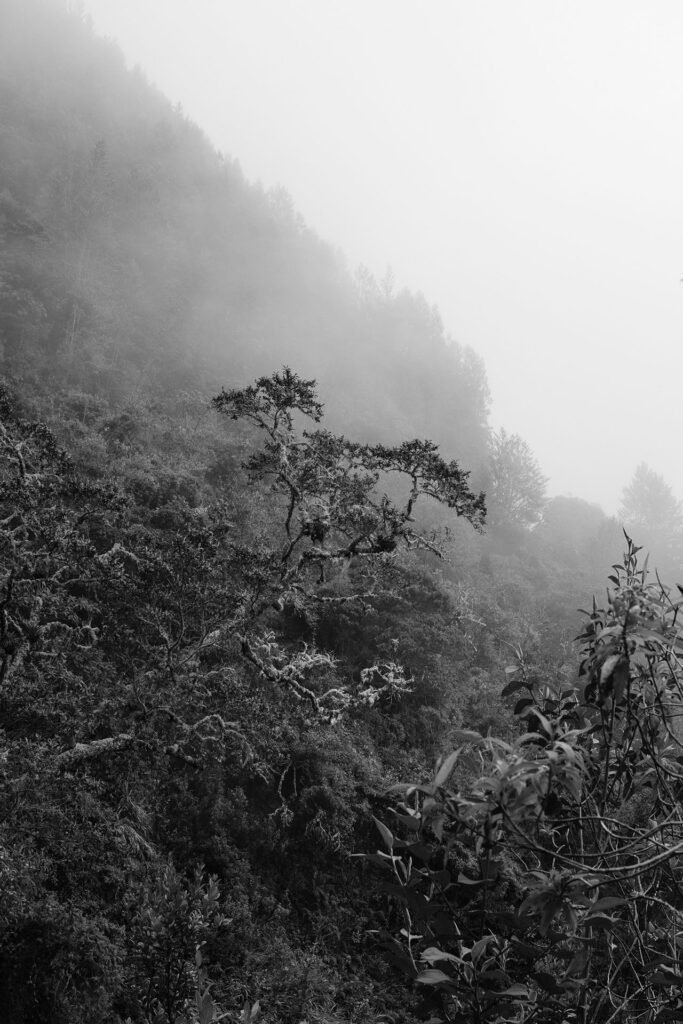
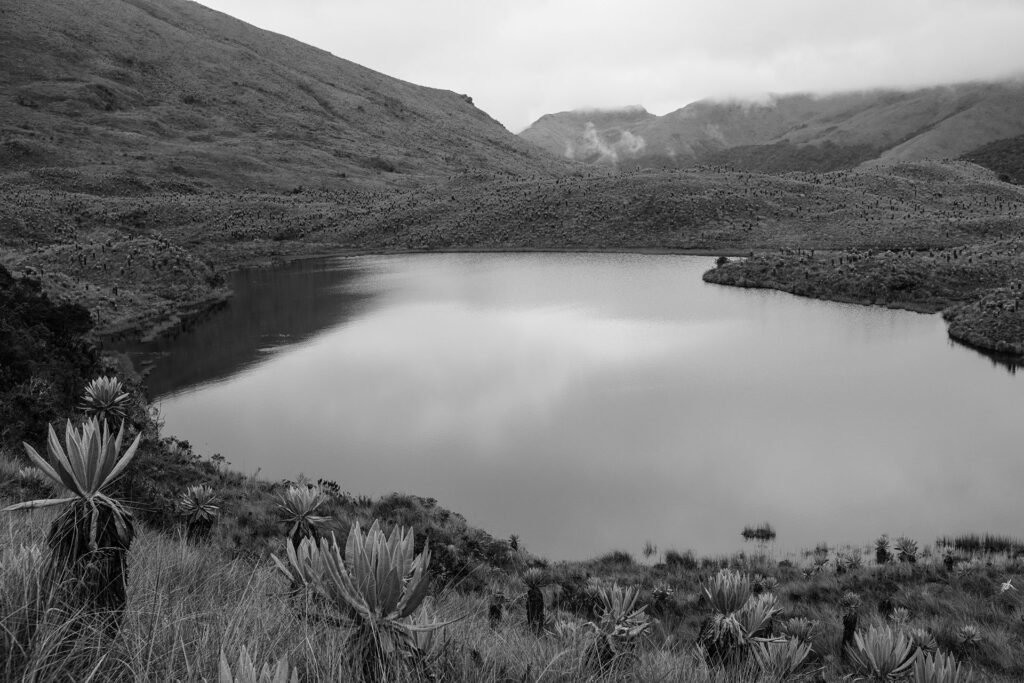
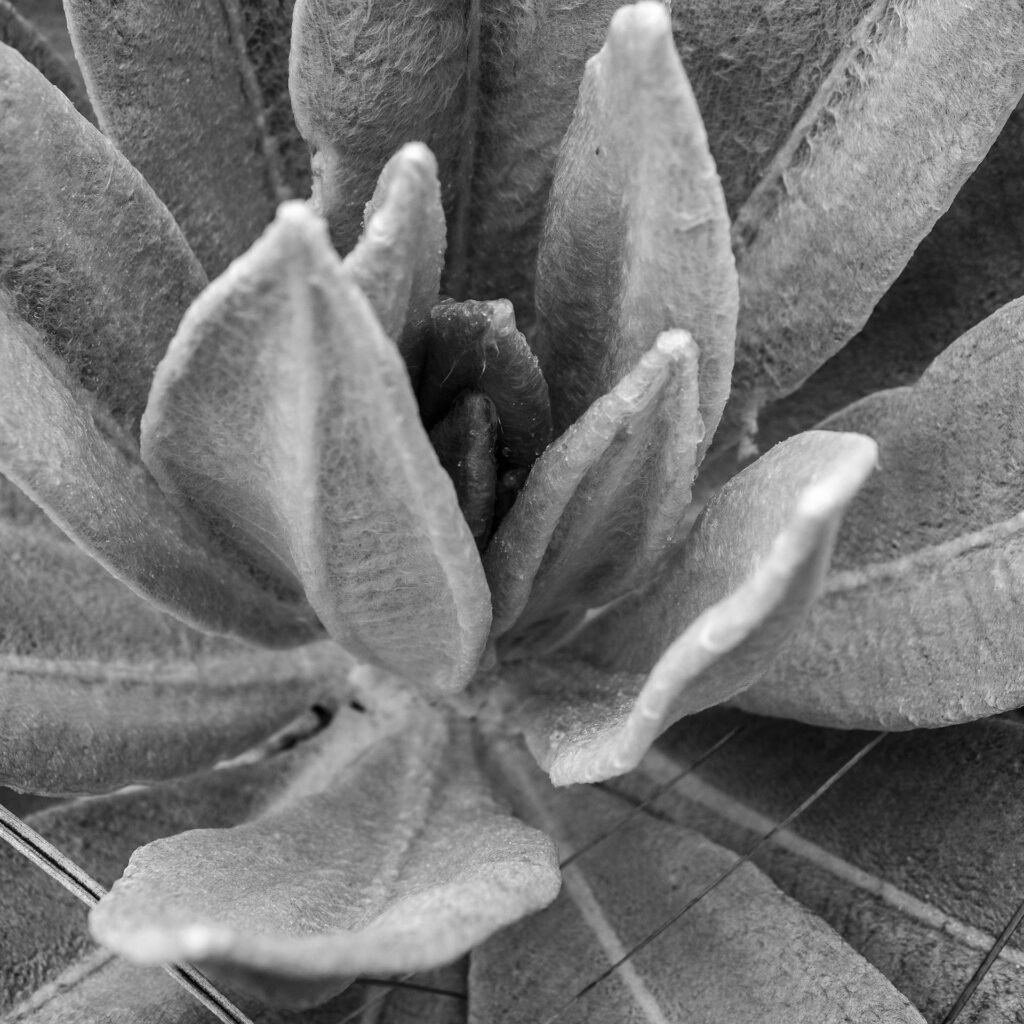
Páramo is part of my series The Water’s Path. The photographs were taken in the Chilí – Barragán Páramo, located in Sevilla, Valle del Cauca, Colombia. It is a high-mountain ecosystem characteristic of the tropical Andean belt, situated between the high Andean forest and the line of perpetual snow.
The páramo is a singular ecological formation in the world: it acts as a hydrological regulator, capturing moisture from rain, fog, and the atmosphere, storing it within its vegetation and organic soils, and releasing it gradually into the basins that feed the rivers. In functional terms, it is a natural infrastructure for water production.
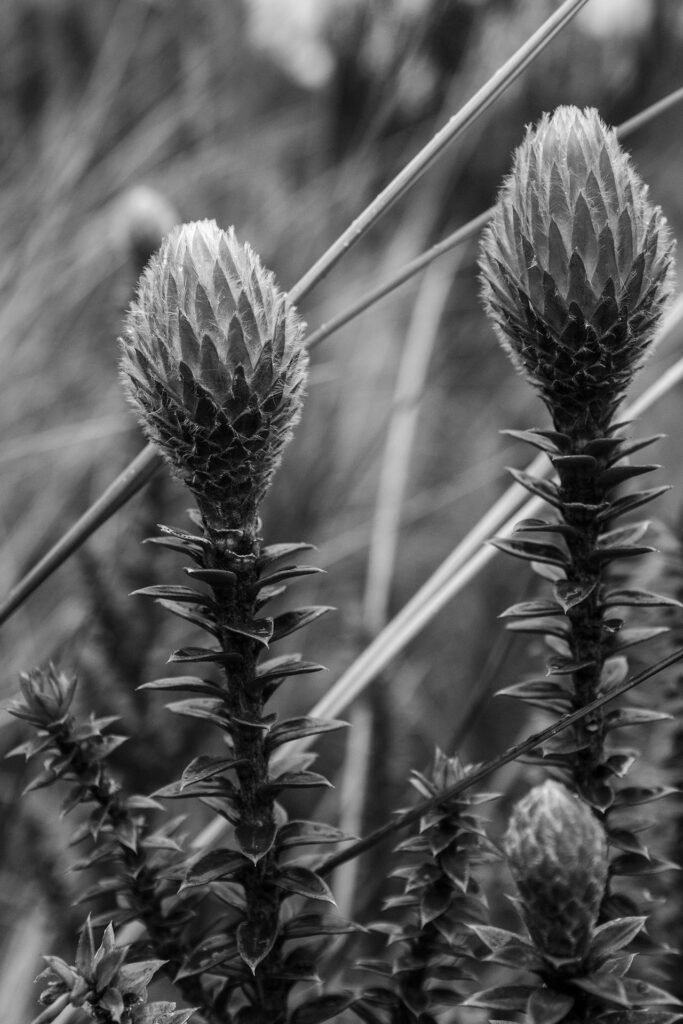
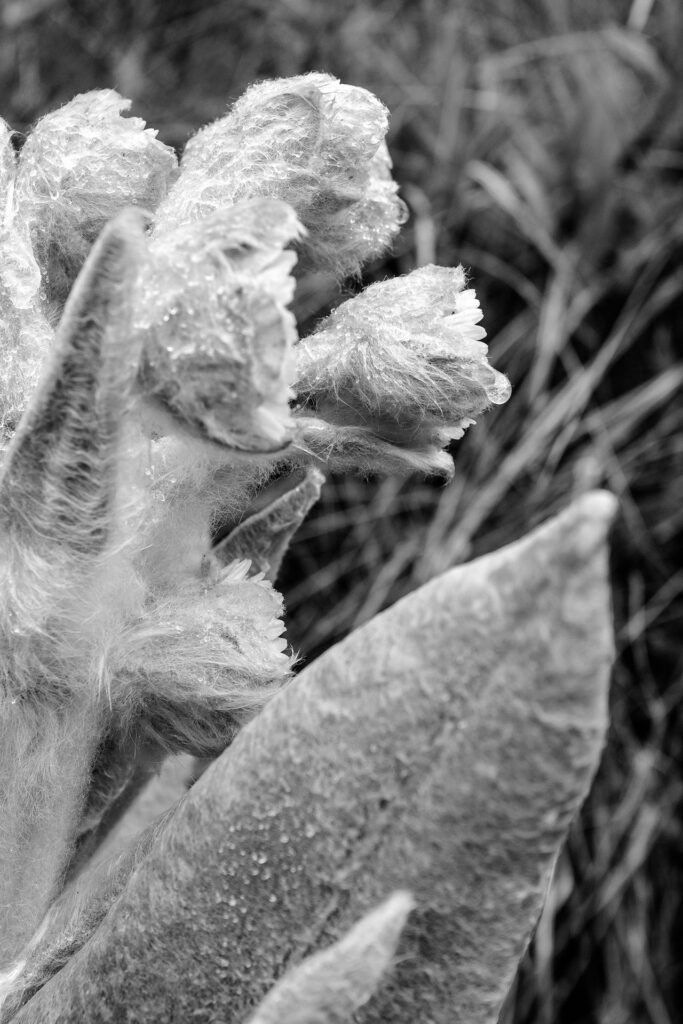
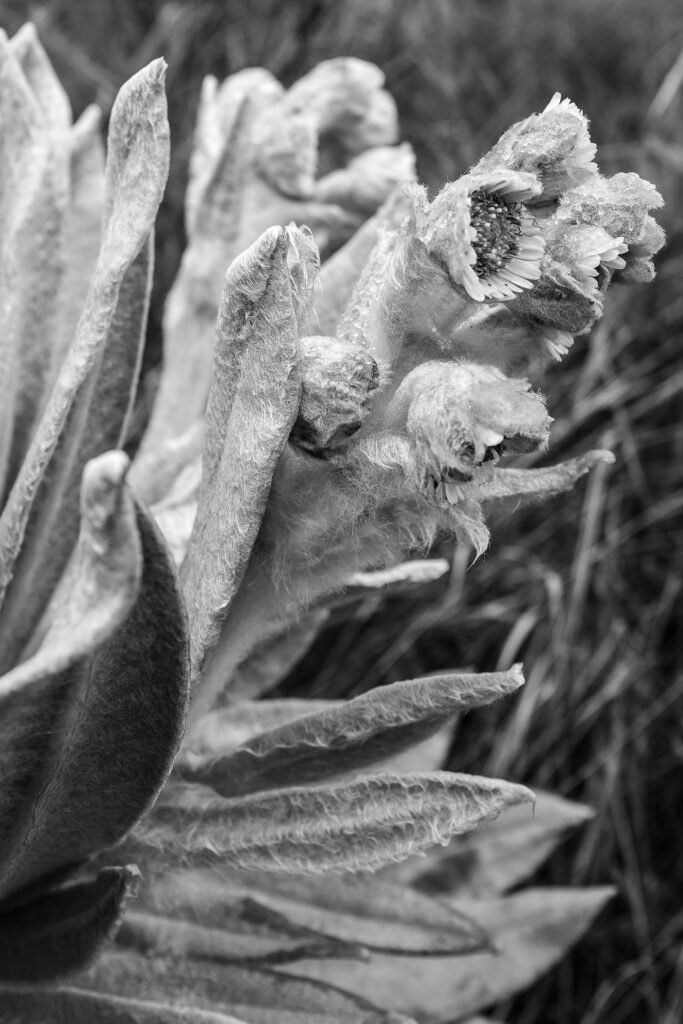
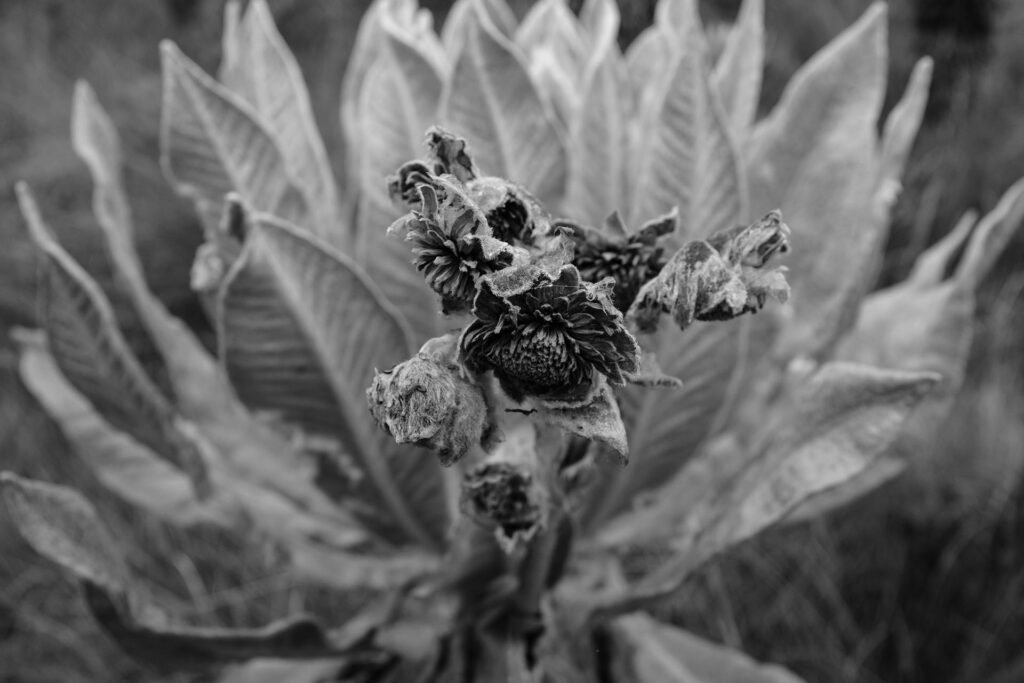
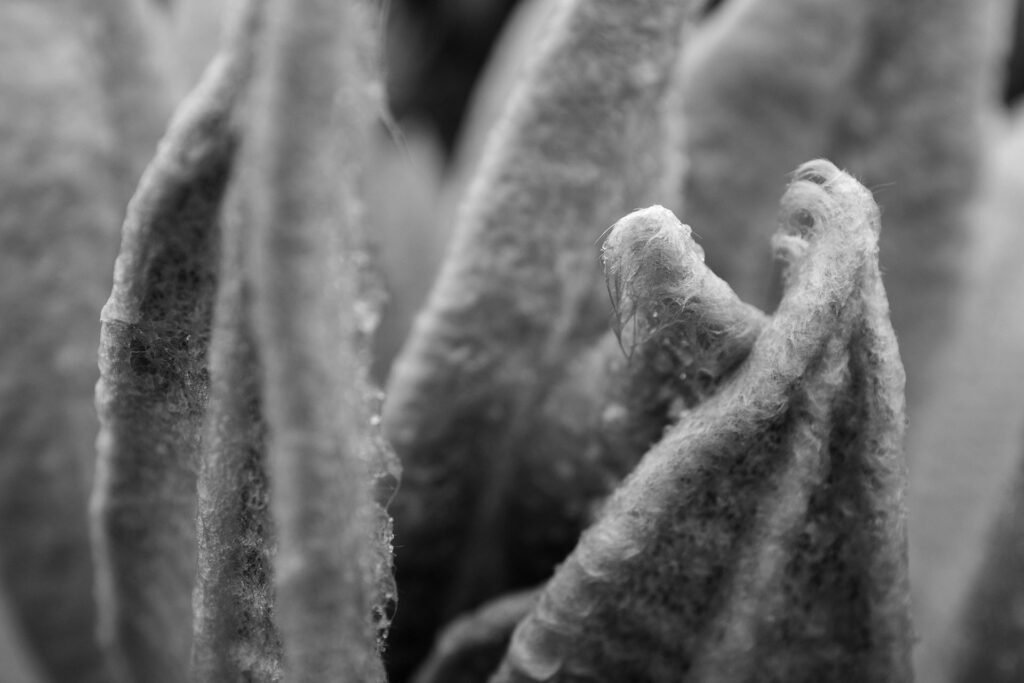
This project approaches the páramo by revealing the beauty of the landscape and its importance as a system. My photographs explore its biological and geological structure, with particular attention to the presence of the frailejón (Espeletia), an emblematic species whose morphology — hairy leaves arranged in rosettes and stems that accumulate dead tissue — allows it to condense moisture and stabilize the soil. Within the series, the frailejón operates simultaneously as a sculptural form and as an element of the ecosystem.
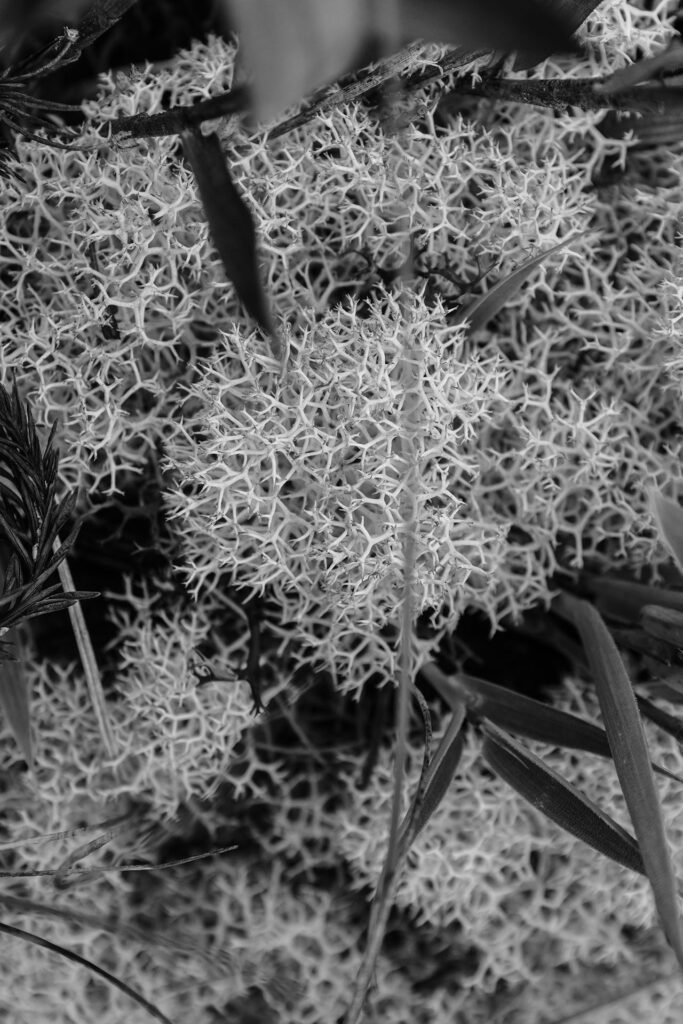
The decision to work exclusively in black and white responds to a conceptual and formal criterion. Color, often associated with the idea of exuberant nature, is deliberately suspended here in order to emphasize the architecture of the territory: lines, volumes, atmospheric densities, and spatial tensions. Contrast directs the gaze toward the texture of the foliage, the porosity of the soil, the opacity of the fog, and the direction of the wind inscribed in the vegetation. Light constructs planes; shadow establishes depth and scale.
The absence of the human figure is intentional. It is not about denying the relationship between humans and the territory, but about displacing the center of representation. The project proposes a non-anthropocentric gaze: the páramo does not appear as a stage for human activity, but as an autonomous entity whose existence precedes and sustains our own. The omission of people places the viewer before the silent magnitude of the ecosystem.
Formally, the series is structured through repetition and variation. The reiteration of frailejones generates a rhythmic pattern that oscillates between the organic and the almost architectural. The framings alternate between wide views that describe the vastness of the territory and closer approaches that “un-cover” details, revealing the majesty of the landscape. Each image functions as an independent unit, yet together they build an accumulative reading that reinforces the notion of an interconnected system.
In a global context marked by the climate crisis and the pressure on water sources, the páramo acquires a political and ethical dimension. This series does not merely seek to illustrate a remote landscape, but to make visible the fragility of a strategic ecosystem. Photography operates here as a tool of rigorous observation and as a gesture of recognition.
The Chilí – Barragán Páramo, beyond being a sublime territory, is a vital structure. This series proposes a visual experience that brings together ecology, form, and critical contemplation. Its strength lies in showing that water sustains life and that everything begins in the mountains: with rain, with fog, in the silent persistence of an ecosystem we must protect.